


























The Role of Crane Mounted Pile Drivers in Marine and Bridge Construction


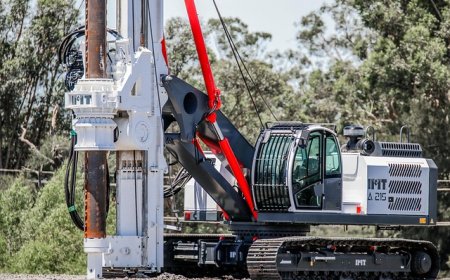
In large-scale infrastructure projects such as marine developments and bridge construction, the demand for heavy-duty, reliable, and efficient equipment is non-negotiable. One of the key machines that continues to play a vital role in these environments is the crane mounted pile driver. Known for its strength and precision, this equipment is specifically designed to handle challenging conditions where stability and depth are critical.
This article explores how crane mounted pile drivers contribute to the success of marine and bridge construction, highlighting their unique advantages and why they remain the go-to solution for deep foundation work in these sectors.
Meeting the Demands of Marine Construction
Marine construction projects often take place in environments that present difficult access, soft or shifting soil conditions, and exposure to water currents. In such scenarios, crane mounted pile drivers provide a stable and powerful solution for installing foundation piles deep into underwater and shoreline substrates.
Whether constructing piers, docks, seawalls, or offshore platforms, these machines allow contractors to precisely position and drive piles with force and accuracy. The cranes lifting capabilities paired with the pile drivers vibration or impact energy make it ideal for working over open water, where floating platforms or barges are used to support operations.
Critical in Bridge Foundations
Bridge construction requires foundational systems that can support massive loads across spans, rivers, and valleys. Piles are driven deep into the ground or riverbed to anchor these structures and ensure long-term integrity. Crane mounted pile drivers are often the preferred method for this job because of their ability to handle long steel or concrete piles and deliver consistent driving force.
Their use becomes especially critical when working in areas where the foundation must reach bedrock or penetrate layers of dense soil. The precision of crane-mounted systems helps avoid misalignment and ensures the piles are installed at the exact angle and depth required by engineers.
Advantages of Crane Mounted Pile Drivers
1. Superior Reach and Lifting Capacity
Cranes can accommodate longer pile lengths than smaller machines, reducing the need for splicing and improving installation efficiency. This is particularly beneficial in marine and bridge projects where longer piles are common.
2. Flexibility in Setup
These pile drivers can be used on land-based rigs, temporary platforms, or floating barges, depending on site conditions. This adaptability makes them ideal for work in both inland waterways and offshore construction sites.
3. Stability and Power
Crane mounted pile drivers are engineered for stability, even in challenging terrain or on water-based platforms. Their power allows them to drive piles into difficult materials, including compacted soil, rock layers, or sediment-heavy riverbeds.
4. Compatibility with Different Pile Types
From steel sheet piles to tubular piles and H-beams, crane mounted systems can handle a wide variety of materials, offering contractors flexibility depending on structural and environmental requirements.
Safety and Efficiency Considerations
Modern crane mounted pile drivers are designed with enhanced safety features, including remote operation capabilities and automated control systems. These innovations reduce the number of workers needed near the driving zone and minimize risks during operation.
Additionally, efficient pile driving translates to shorter project timelines, reduced labor costs, and fewer delays critical factors when working in environmentally sensitive or high-traffic waterways.
Conclusion
Crane mounted pile drivers are indispensable in the construction of marine and bridge structures. Their unmatched power, reach, and adaptability make them the ideal solution for demanding foundation work in environments where precision and reliability are paramount. As infrastructure needs grow and engineering challenges evolve, these machines continue to prove their value in supporting some of the worlds most essential construction projects.